Directive 8020
Platforms: PS5, Xbox Series X|S, PC Are game developers OK? Is planetary...
Platforms: PS5, Xbox Series X|S, PC
Are game developers OK? Is planetary nihilism spreading through their ranks? It just that Directive 8020, the fifth game in Supermassive Games’ The Dark Pictures Anthology meta-series, starts with the same “Earth is on the brink of human-driven collapse!” scenario as both Aphelion and Cthulhu: The Cosmic Abyss. Not that the climate crisis isn’t the greatest threat to our species, but it’s weird three games have arrived with the same narrative hook in as many months.

However, unlike the other two, Directive 8020 is a purely story-driven outing, and although it largely drops the Dark Pictures branding, it’s still built on the same bones. Its tale of a crew of astronauts out to survey a contender planet for humanity’s new home, only to find themselves under threat by a monstrous alien presence, splinters at hundreds of junctions, with each choice made and every objective completed or failed. It also serves as the start of the second Dark Pictures “season”, and despite burying the framing device of the Curator, there are plenty of links back to earlier games, especially 2021’s House of Ashes.
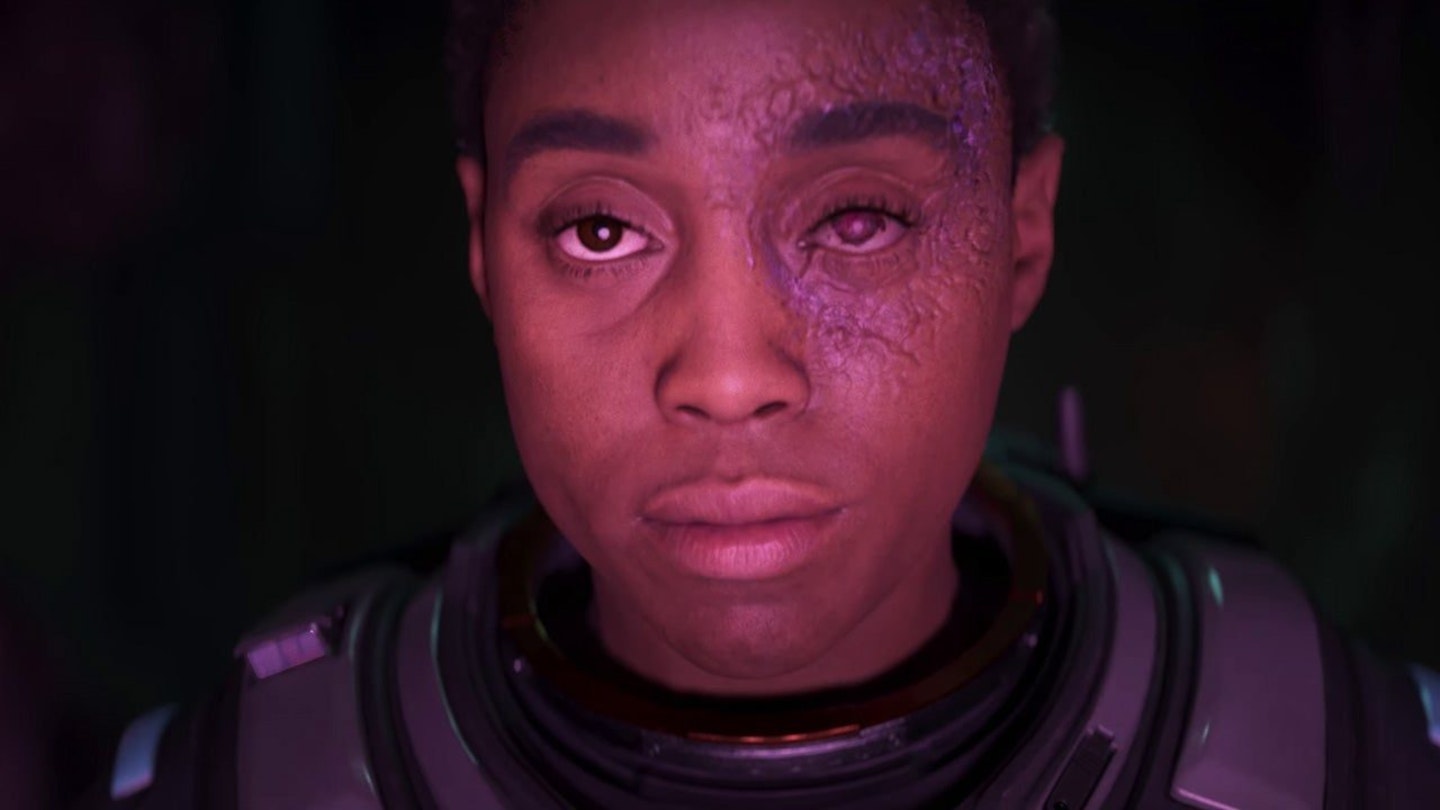
The highlight is undoubtedly the casting, with No Time To Die’s Lashana Lynch headlining as pilot Brianna Young, and rounded out by Black Panther’s Danny Sapani as commander Nolan Stafford, Nuremberg’s Lotte Verbeek as second in command Laura Eisele, How to Train Your Dragon’s Anna Leong Brophy as medical officer Samantha Cooper, and stage and screen actor Philip Arditti as engineer Josef Cernan.
Control shifts between these five protagonists (in single player; multiplayer sees characters assigned between players to maximise the unpredictability factor), rounding out the story with different perspectives and insights. Certain decisions will also subtly shift the cast’s personalities, increasing or decreasing certain traits that can, in turn, lock in certain “destinies” for them. The all-star cast fully commit, instilling their roles with impressive seriousness and pathos, and genuinely making players care about their fates. As some may die over the course of the game, you’ll often find yourself wanting to revisit earlier chapters to make difference choices and spend more time with them.
The ability to hop back and forth along the time-line is one of the most significant changes Directive 8020 makes over its predecessors. Dubbed “Turning Points”, it allows you to skip back at any point – if a beloved character dies, for instance, or you realise you made a particularly poor choice. Its impact is hit and miss though – on one hand saving players time over replaying entire chapters or the whole game from scratch, and from having to remember when to zig where they previously zagged, but on the other removing most of the peril from the series’ signature brand of choice and consequence.
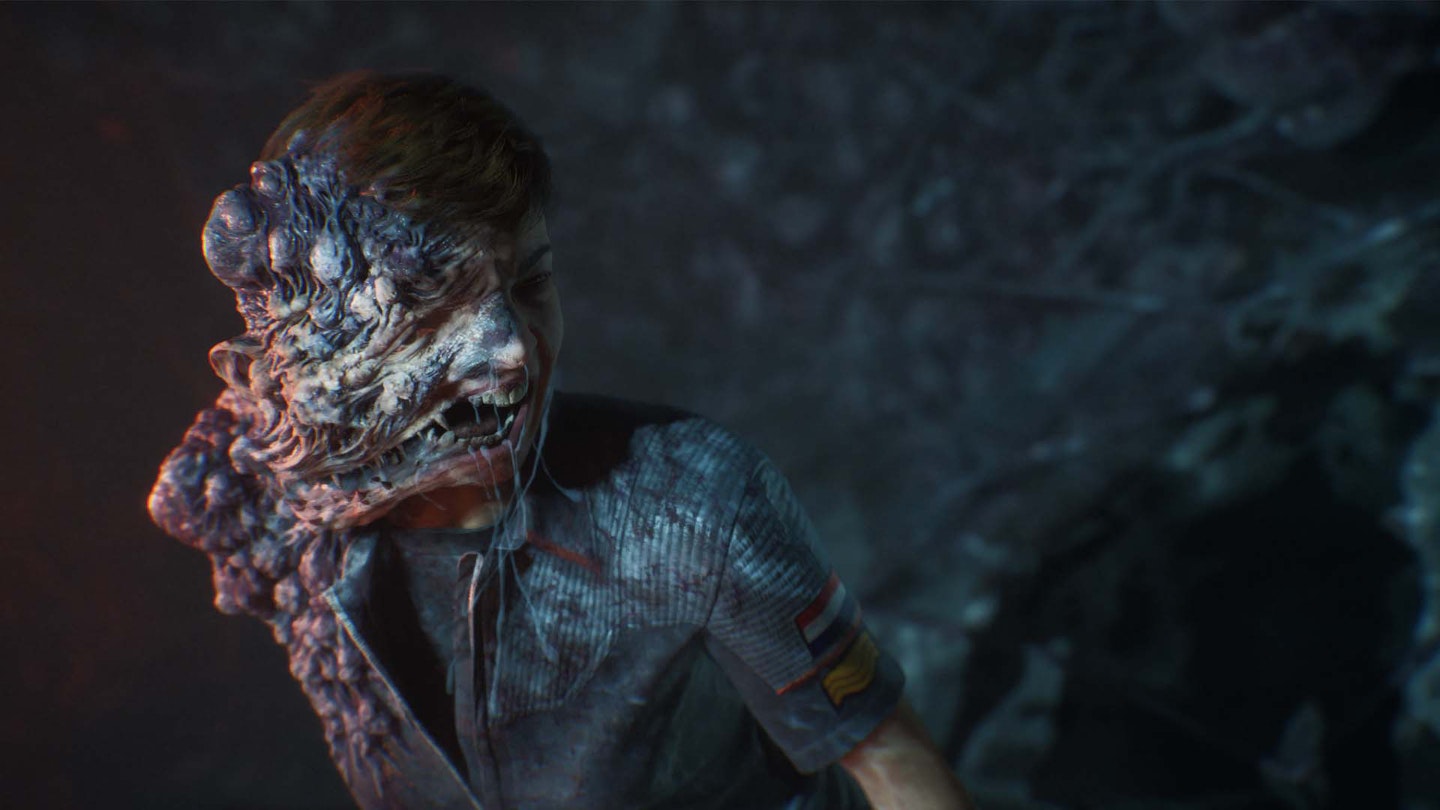
Maybe it’s down to a few decades of shared cultural familiarity from the likes of Alien or Event Horizon that undermines it, but there’s little that this does with its mix of sci-fi and nightmarish organisms from the depths of space that sends shivers down the spine.
At any point, even during cutscenes, you can pause and view the entire timeline of the current or previous chapters, seeing each node and every branch. While nodes you’ve not reached yet will be blanked out, branching points still to come will outright tell you which choice you need to make on the prior node, allowing you to plot out exactly how you want to sculpt the story. Even though players can opt for “Survival Mode” – the traditional Dark Pictures experience, no takie-backsies – you can still view all the nodes, undermining much of the uncertainty.
Supermassive also tries to make Directive 8020 more of a game, less of an interactive movie, but also to mixed effect. A small encyclopedia’s worth of collectibles are scattered around, adding a bit of world building depth and some mechanical replay value if you miss any – although one datapad, found early on, telegraphs a late-game story twist with glaring neon lights if you’re paying attention – while the familiar quick-time-events that sufficed as action for previous entries are joined by occasional stealth sections as the crew try to avoid alien monsters. Unfortunately, these are unforgivably dated in design and clunky in approach – hide behind conveniently waist-high obstacles, use an x-raying pulse to see exactly where the creature, create distractions to move past undetected, repeat a few dozen times. It’s tense at first, but soon becomes more of a chore than a scare.
Which brings us to Directive 8020’s biggest failing – for the latest entry in a long-running horror gaming series, it’s just not scary. Maybe it’s down to a few decades of shared cultural familiarity from the likes of Alien or Event Horizon that undermines it, but there’s little that this does with its mix of sci-fi and nightmarish organisms from the depths of space that sends shivers down the spine. Even attempts at jump scares are easily spotted in advance, despite the occasional clever use of framing devices like observing remote locations through security cams – any halfway seasoned viewer just knows when something is about to move in front of the lens.
Still, this all works well as a slice of science fiction in its own right, elevated by its committed cast and some strong character writing. Supermassive Games’ efforts to evolve the series here don’t always pan out, but they do help lay the groundwork for whatever the Dark Pictures Anthology may evolve into over the course of this new season – and hopefully that involves some more scares in future.
What's Your Reaction?