Rose Of Nevada
If you saw Mark Jenkin’s first two features, 2019’s evocative and...
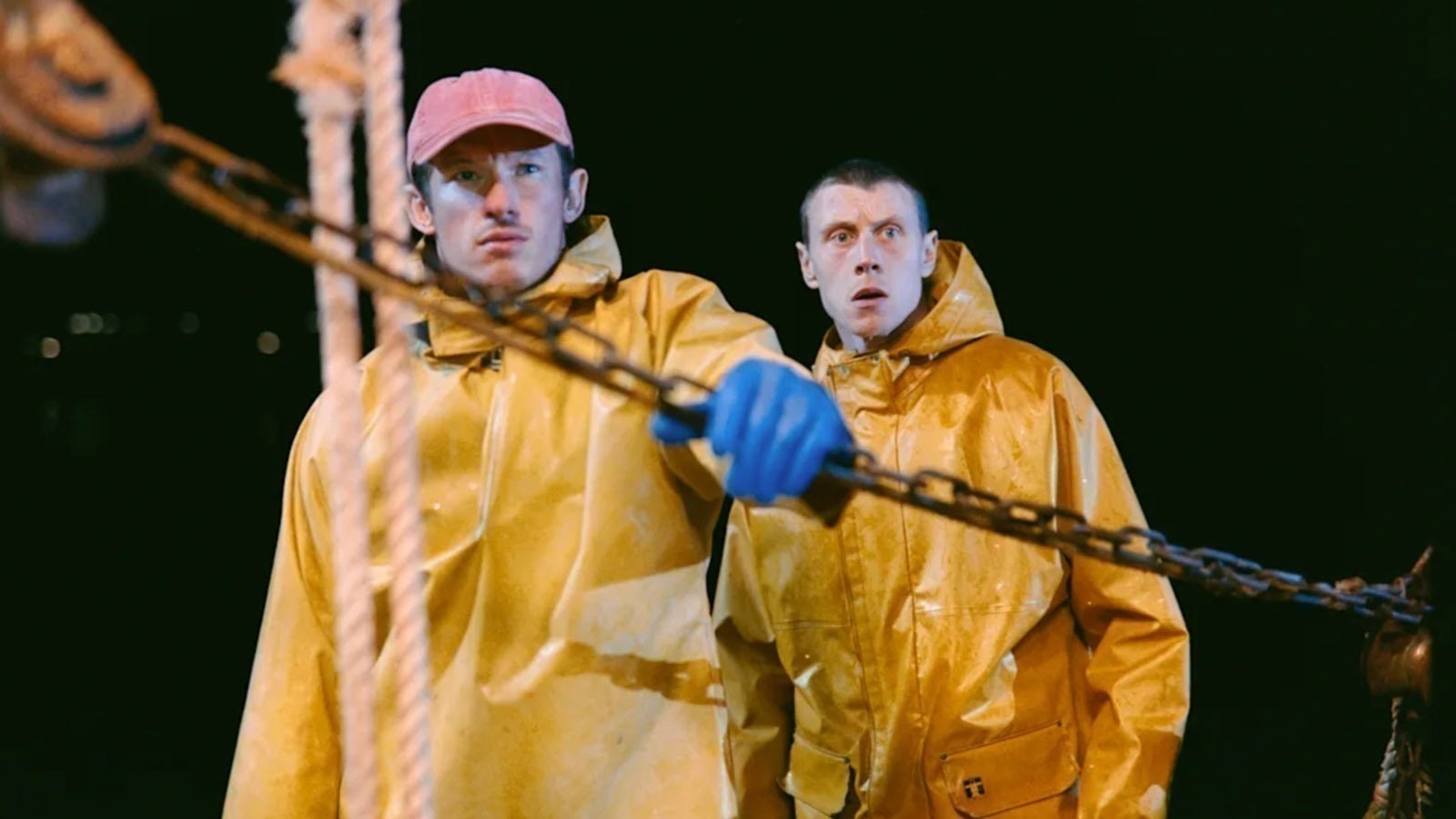
If you saw Mark Jenkin’s first two features, 2019’s evocative and unquantifiably odd Bait, and 2023’s even more unusual Enys Men, you might think you’ll know what to expect from his third. Yes, Jenkin’s singular, uncompromising style remains unchanged: hand-cranked, grainy 16mm film brought to imperfect life with scratches, fibres and lens flare, and a post-synched soundtrack that lends his films an uncanny vibe. Rose Of Nevada feels thematically familiar too, sharing Bait’s grief over lost fishing communities and Enys Men’s temporal and hauntological shenanigans. But Jenkin weaves a whole new tale of the unexpected here: one that will leave you scratching your head and smelling of fish for days.
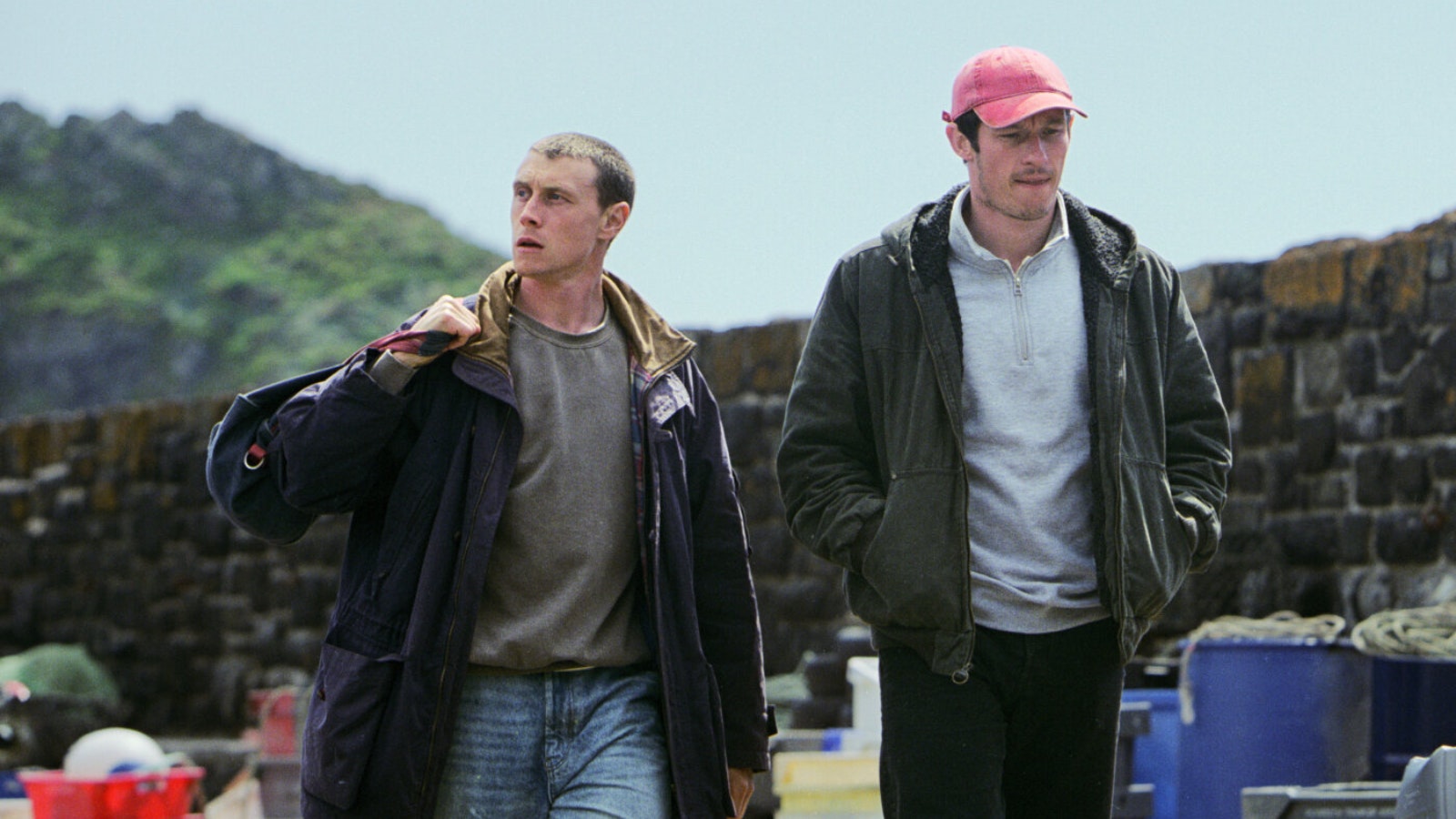
Rose Of Nevada is the story of the titular trawler, a small boat which appears, unmanned, in the harbour of a present-day, run-down Cornish village 30 years since it, and its crew, went missing. The boat’s disappearance coincided with the collapse of the local economy, and the villagers see its return as an omen. A new crew is assembled — financially desperate family man Nick (George MacKay), on-the-run drifter Liam (Callum Turner), and a mysterious, salty sea-dog of a skipper (Francis Magee) — and the trio set off to bring in a haul intended to end three decades of stagnation and community atrophy. But when they return with their catch, Nick and Liam find themselves inexplicably stranded in the 1990s, greeted by the townsfolk as the original crew.
The time-travel premise sounds high-concept, but this is less Robert Zemeckis than Robert Bresson. You might be reminded of Back To The Future by the bamboozled protagonist looking for a way to escape a 30-years-younger version of his home town, but Jenkin is more interested in a nightmarish, woozy ambience, evoked by rhythmic sound and images and fractured editing, than a propulsive, clearly determined narrative. Ambiguity is everything here, which will either invite you to consider myriad allegorical readings — climate change, Brexit, industrial decline and the cost-of-living crisis are all hinted at — or just put you off altogether. What’s undeniable, though, is that Jenkin’s filmmaking (he directs, shoots, edits, composes the score and designs the sound himself, as well as operating the camera) is the star of the show. Mesmerising shots of rusted metal, weathered woodwork and flourishing lichen signify a world in decay while, perversely, primary colours — the blue Cornish sky, Callum Turner’s pink baseball cap — pop off the screen and slap you in the face. This is a film you can virtually feel. It might not be entry-level Mark Jenkin (that would be Bait), but if you’re willing to surrender to its unique world, it’s well worth getting on board.
What's Your Reaction?