Relay
If there’s one thing clear from the off, it’s that David...

If there’s one thing clear from the off, it’s that David Mackenzie’s Relay has its sights firmly set on the paranoid thrillers of the ’70s. Following Sarah (Lily James), a corporate worker looking to expose the questionable practices at the bioengineering company where she works, the opening plunges straight into the world of whistleblowing, with visuals that bring to mind genre classics like The China Syndrome and The Conversation. The twist is that once Sarah finds herself entangled with the wrong people, her only lifeline is a fixer, Riz Ahmed’s Ash, who communicates exclusively through a relay service, a telephone system that allows people with hearing or speech impairments to talk to hearing people. Much of the story unfolds through a series of phone calls and low-key package drop-offs, creating a tension-filled story that zips along.
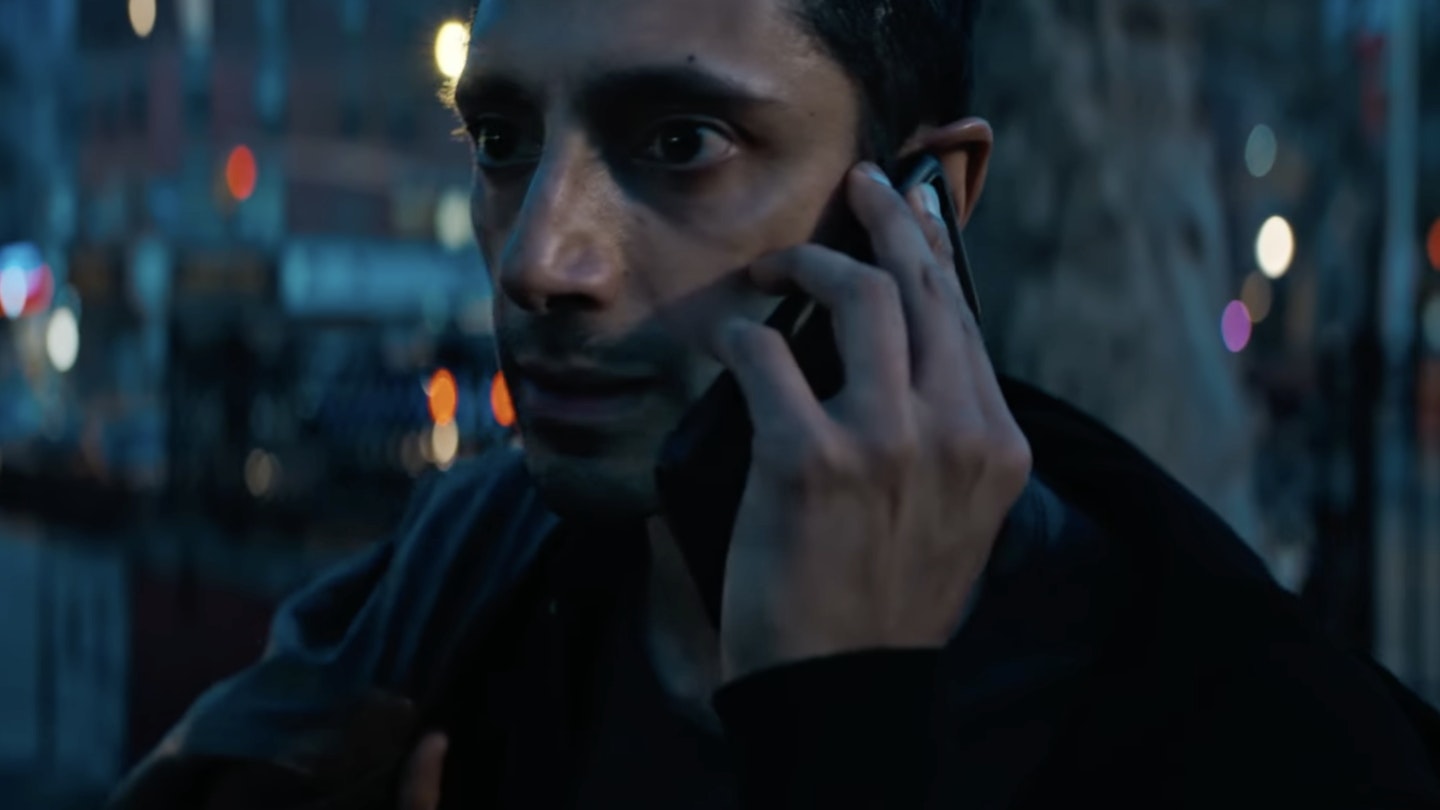
The relationship between these two very opposite characters is the heart of the film: Ash is methodical and tightly wound, with Sarah a more warm, thoughtful counterpoint. What’s remarkable is how much Ahmed manages to communicate with so little dialogue. His performance begins icy and restrained, but as the layers peel back, we glimpse someone quietly — and ironically — yearning for connection. It’s easy to see why Ash would be drawn to deer-in-the-headlights Sarah: even with the communication barrier between them, the pair sell this authentic relationship.
The script even gives its baddies some real personality, including a crew of capitalist goons hired to track Sarah down led by Sam Worthington’s Dawson and Willa Fitzgerald’s Rosetti. More highly skilled douchebags than your standard henchmen figures, they’re genuine arseholes — boisterous, cunning and, at times, even a little funny. The standout sequence comes early at an airport, where many of the characters collide for the first time after Ash lures Sarah’s pursuers into a trap, complete with over-the-top disguises and elaborate misdirection. This is where the film absolutely nails the ’70s thriller vibe, with Mackenzie and writer Justin Piasecki clearly having a blast revelling in the pastiche.
What holds Relay back is its inability to sustain that grounded tension into the third act. Carefully constructed scenes give way to a more conventional, Bourne-style action climax. When the bullets start flying, it’s hard not to feel a little disheartened, knowing how strong the film was when maintaining its own deliberate pace. Plus there’s a third-act reveal you’ll probably guess at least 30 minutes before it arrives, and for all its talk of corrupt corporations, the conclusion feels a little too neat. Still, it’s worth highlighting just how much the first two acts get right — even if the ending falters slightly, Relay remains a call worth taking.
What's Your Reaction?